Planting Native Trees and Shrubs

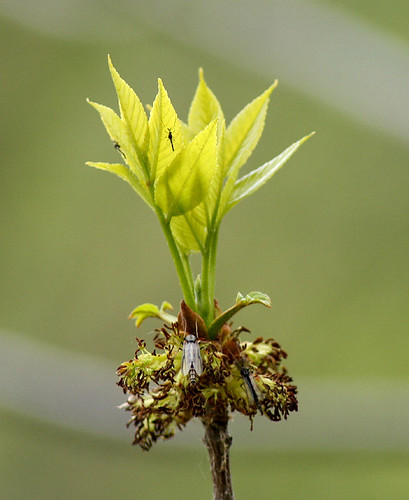
new green ash 3 by withrow

Are readers of TheGardenLady thinking of planting native trees and shrubs in your yards? Are you willing to plant them as seedlings? Especially now, after the terrible storm that blew so many trees down, you might be considering replanting your property.

A place to get them is a nursery in Jackson, NJ that has been in business for 100 years- so they know their native trees and shrubs. This is the only state run nursery in NJ. See here. This nursery raises native trees and shrubs from seeds. If you have a large enough property, this is a place to get your planting done quickly and cheaply. The NJ State Forest Nursery (732) 928-0029 will sell you a bundle of thirty tree seedlings- 3 or 4 different kinds in each bundle depending on where you want to plant these seedlings.

There is a:

Watershed Packet: These species like moist soils and prevent runoff.

Wildlife Packet: These species provide food and habitat for wildlife.

Beautification Packet: These species are aesthetically pleasing.

The trees in the groups include:


Green ash by Fr Antunes

Green Ash (Fraxinus pennsylvanica) – Fast growing tree to 50-60 ft tall
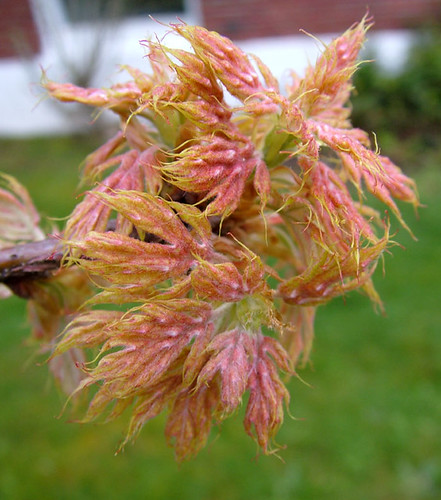
Pin Oak Leaves – Quercus palustris by maxi millipede

Pin Oak (Quercus palustris) – Grows to 60-70 ft, 25-40ft ft wide, red fall color

Silky Dogwood (Cornus amomum) – Grows 6-10 ft, 6-10 ft wide. Creamy white flowers in spring
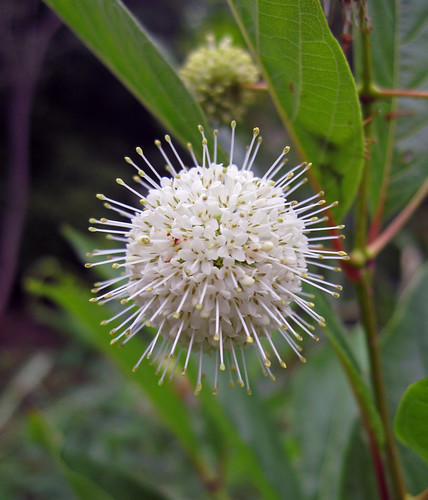
Cephalanthus occidentalis, Common buttonbush, Roanoke, Virginia by shyzaboy

Buttonbush (Cephalanthus occidentalis) – Shrub grows to 12 ft. Small, white flower clusters in late summer
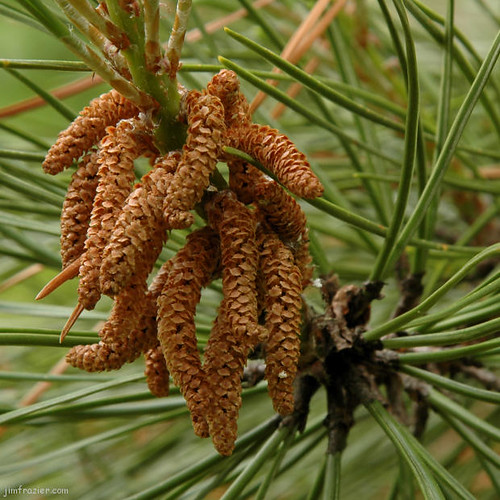
Pitch Pine by Jim Frazier

Pitch Pine (Pinus rigida) – Grows to 60ft. Hardy and fire tolerant

White Pine (Pinus strobus) – Grows to 50-80 ft, 20-40 ft wide. Fast growing

Silky Dogwood (Cornus amomum) – Grows 6-10 ft, 6-10 ft wide. Creamy white flowers in spring

Oak Alley by Lake Fred

Oak (Quercus spp.)

White Pine (Pinus strobus) – Grows to 50-80 ft, 20-40 ft wide. Fast growing
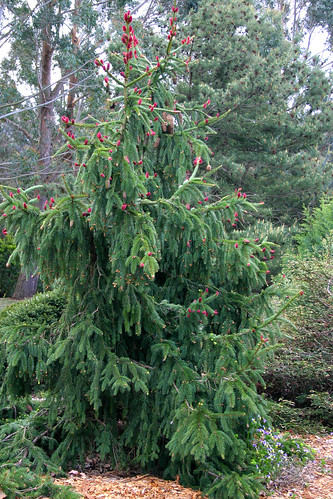
Picea abies ‘Acrocona’ 031012-063 by Tony Rodd

Norway Spruce (Picea abies) – Hardy, aromatic, and fast-growing to 60 ft tall

The seedlings have to be ordered no later than March for an April or May delivery or you will have to wait for next spring for delivery. Though this is basically for NJ residents, when I called them to see if they would sell these bundles to people in other midAtlantic states, they seemed to say they would. Tell them that TheGardenLady recommended them. Out-of-staters have to phone or visit the nursery. If you live in NJ you can order on line here.

This nursery also offers all sorts of interesting classes about trees such as how to identify trees and tree care. Classes are for children and adults. And if you drive to their nursery, they have miles of hiking trails. Make this a day’s outing.
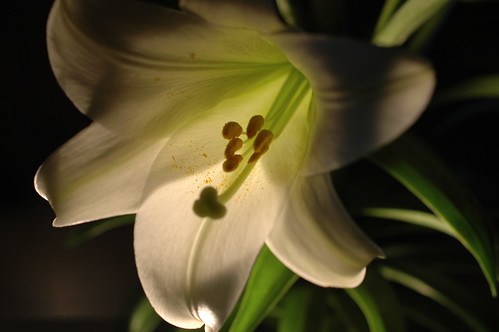
The Easter Lily Plant – Easter Lilies-Lilium Longiflorum

Easter Lily by **Mary**

Easter is coming and so are the Easter Lilies-Lilium longiflorum. Did you know that ten growers, most located along the California-Oregon border, produce 95 percent of all bulbs grown in the world for the potted Easter lily market?

If you purchase an Easter Lily plant, check to see that it is a healthy plant. At home, keep your lily away from drafts and drying heat sources such as appliances or heating ducts. Bright, indirect light is best with daytime indoor temperatures of 65 to 75° F. Water the plant only when the soil feels dry to the touch.  NEVER over water. Pour out any water in the saucer under the plant. To prolong the life of the blossoms, remove the yellow anthers (pollen-bearing pods) found in the center of each flower.  See here.

On this Easter Sunday…. by calamityjan2008

Easter Lilies are one of the loveliest flowers and the fragrance is ambrosial so one hates to discard the plant when it stops blooming. Since Easter Lilies are forced to bloom at Easter time in hothouses by professionals, they are difficult to keep in pots at home for another season of bloom. But you might have some success if you plant the bulb outside after the plant finishes blooming. Remember that forced blooms are not always successful for replanting. But it is worth the try.

Continue reading “The Easter Lily Plant – Easter Lilies-Lilium Longiflorum”

Earth Hour – March 27, 2010, 8:30pm

Earth Hour by lemmingstone

On March 27, 2010 at 8:30 p.m., join millions of individuals, governments, businesses, and other organizations around the world in celebrating Earth Hour by turning off your lights for one hour in a symbolic action to bring attention to climate change.

This simple act is intended to deliver a strong message about the need to implement immediate solutions to what is believed to be the greatest threat our human species has ever faced. Switching off lights for one hour will unite us in a commitment to stop climate change.

If every household in New Jersey turned off the lights for one hour, New Jersey would save 508 MW of electricity and $1.9 million in electricity costs. In addition, during that same hour we could avoid emitting 230 metric tons of carbon dioxide, which is equivalent to planting 5,897 trees or taking 16,050 cars off the road for one day.

Earth Hour began in 2007 in Sydney, Australia with 2.2 million homes and businesses shutting off their lights for one hour. In 2008, this event became a global sustainability movement with about 50 million people in 35 countries participating. Nearly one billion people turned out for Earth Hour 2009 – involving 4,100 cities in 87 countries on seven continents. In the United States alone, 80 million Americans and 318 U.S. cities officially voted for action with their light switch.

A number of iconic landmarks from around the world that went dark for Earth Hour last year includes: Empire State Building, Brooklyn Bridge, Broadway Theater Marquees, Las Vegas Strip, United Nations Headquarters, Golden Gate Bridge, Seattle’s Space Needle, Church of Latter-Day Saints Temple, Gateway Arch in St. Louis, Great Pyramids of Giza, Acropolis and Parthenon in Athens, Christ the Redeemer Statue in Rio de Janeiro, St. Peter’s Basilica in Vatican City, Big Ben and Houses of Parliament in London, Elysee Palace and Eiffel Tower in Paris, Beijing’s Birds Nest and Water Cube, Symphony of Lights in Hong Kong and Sydney’s Opera House

This year, organizers hope that over 1 billion people in 1,000 cities around the world will participate in this awareness event. Well known landmarks will dim their lights, including: the world’s tallest hotel building in Dubai – the Burj Dubai, Toronto’s CN Tower, Moscow’s Federation Tower, Australia’s Sydney Opera House, the Eiffel Tower and Cathedral of Notre Dame in Paris, and Table Mountain in Cape Town.

We can do this in fun ways by going star watching with our kids, having a candlelight dinner at home with family and friends, throwing a neighborhood block party, or doing something more with your town and local businesses to encourage them to shut off non-essential lighting.

For more information, please visit: http://www.myearthhour.org/

Should Blueberries be Planted Near a Wall?

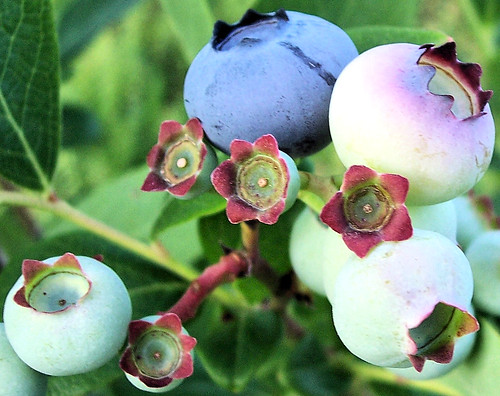
Ripening in the Sun by Isadore Berg

TheGardenLady received this question from Mui.

I have a flowerbed that is about a foot wide, 15 feet long and it is right next to the wall of my house. Can I plant blueberry shrub there? My concern is that as the plant grows bigger, the root will damage the wall and the foundation of the house.  Please advise.

There is a possibility of growing blueberries in your flower bed if it is a sunny spot – read to the end of the post for suggestions. However, TheGardenLady would recommend other plants than blueberries in the site you describe. Let me explain.

There are two main types of blueberries, high bush blueberries Vaccinium corymbosum and low bush blueberries Vaccinium angustifolium. High bush blueberries are the kind you buy in the stores. Low bush blueberries are the wild blueberries or the blueberries you buy in Maine or Canada. Both blueberries like sun, acid soil and good air circulation.

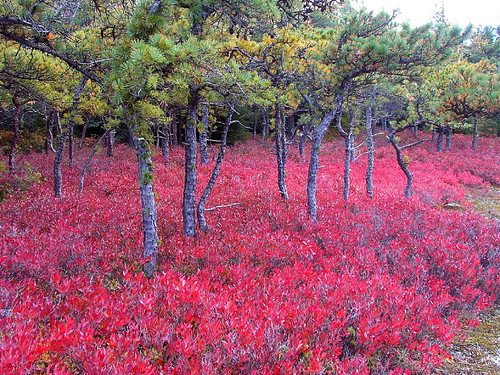
Blueberry bushes Lake Minnewaska by natureluv

Planting near a wall may have major problems for the plants. You might have shade. (Blueberries need a minimum of 6 hours of sun. They tolerate partial shade but won’t produce as many blueberries.) And you might not get good air circulation.

You definitely don’t have room enough in a 1 ft wide bed flower bed for high bush blueberries. A flower bed that is only one ft. wide, is really too narrow to plant the high bush blueberries especially if it is so close to a wall. I am more concerned about the shrub than the wall of your house when I say this. A high bush blueberry shrub at maturity can become 5 to 6 ft wide. A one foot wide area right next to a wall would not allow room for the plant or its roots to expand. And being this close to a wall will not allow good air circulation for the plant which will mean not only deformed plant growth on one side of the shrub, but can cause the plant to be more susceptible to plant problems. And with the wall, there might be shading of the plant part of the day. Blueberries do need full sun. Or the wall might bake the roots or one side of the shrub which can damage the plant.

Continue reading “Should Blueberries be Planted Near a Wall?”

2010 Orchid Show at Longwood Gardens, March 26, 27 & 28

Longwood Gardens second Orchid Show (2) by KarlGercens.com

A wonderful orchid show will be held at Longwood Gardens this coming Friday March 26th, Saturday March 27, and Sunday 28th, from 9am-6pm daily. In orchid growers’ opinions, this is the best show on the East Coast, filled with outstanding orchid exhibits, judged by American Orchid Society judges, educational orchid lectures, and numerous orchid vendors from around the world offering orchid plants and supplies for sale. For more information, go to www.longwoodgardens.org and click on International Orchid Show and Sale for detailed information. Stony Brook Orchids will be there all three days, so please stop by and say hello. Say TheGardenLady sent you.

Open House at Carolyn’s Shade Gardens Nursery, Saturday, March 27

Carolyn’s Shade Gardens Nursery is having its first spring open house on Saturday, March 27, from 10 to 3, rain or shine (checks and cash only). Directions are attached. For the convenience of her neighbors, please park on the right side of Robinhood Rd only and do not block mailboxes and driveways.

Feel free to schedule an appointment if you can’t make it on Saturday—you won’t want to miss all the exciting plants described below! Carolyn is available days and evenings this week. Just send her an email with a suggested time.

Carolyn Walker has an excellent assortment of top quality shade plants available right now, and her gardens are beautiful. Here are descriptions of some of the exciting offerings:

Continue reading “Open House at Carolyn’s Shade Gardens Nursery, Saturday, March 27”

The Debate over Naked Gardening

Naked Garden by LORENA CEJUDO

To garden with or without clothes (or a minimum of clothes) that is the question that even Shakespeare hadn’t pondered. But we gardeners will have to wait ’til April for the sages in the City Council in Boulder, Colorado to find out what they decide.

Check out this article: Topless gardening: A human right or wrong? Neighbors’ complaints prompt rule change; thong-clad couple vows to fight

Now I don’t think the radishes or tomatoes care what one wears to plant or harvest them. Or is that why they are red? Because they are blushing. So perhaps you can only go about in minimal or no garb when planting lettuce and spinach.

I had read that Ruth Stout, the guru of easy gardening “The Ruth Stout No-Work Garden Book: Secrets of the year-round mulch method” liked to garden in the buff.

So readers, let TheGardenLady.org blog readers know what you think on this most important horticultural issue. Will this gardener use the argument that she does wear more than meets the eye? That she wears mosquito repellent and/or suntan lotion.

Taking Care of Your Sansevieria (Mother-in-Law’s Tongue)

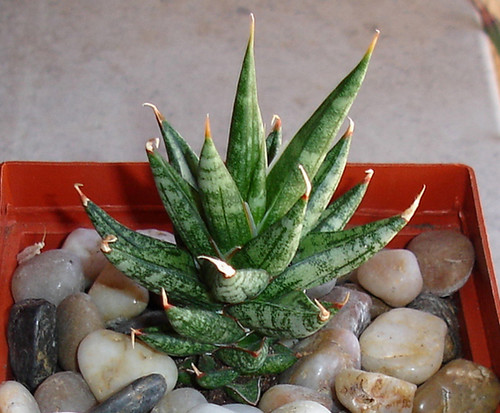
Sansevieria francisii by allloe

TheGardenLady has received a number of questions about Sansevieria or Mother -in- Law’s tongue. Two of the questions are listed here. Two others relate to keeping the Sanserieria alive after freezing and what to do if the plant has root rot.

My wife has a snake plant that’s starting to bloom, and it has a sticky liquid coming from the pod clusters. I’d like to know what it is and what it’s for?

I am caring my for my mother-in-law’s mother-in-law tongue. I of course don’t want to kill it, but it looks awful. I think it was over-watered at one time, and kept in the dark, damp, cool basement, over the winter months. I have recently brought them upstairs, where it is warmer and can dryout a little. It appaers the soil never dried out. The leaves at the soil line are yellowing and going up the plant leaf itself. They are falling over and nothing I do can keep them standing up. I think originally they were potted in Miracle grow potting soil. I would like to save these plants, but I not sure what I can do? Can I just cut the top portion of the leaf off and place it in soil to re-root?

There is no question that Sansevieria is a very popular plant. One of the reasons that the plant is so popular is because it is such a tough plant that is so easy to grow with so few problems or pests. There are about 70 species of sansevierias to have a variety of leaves to choose from. Because of its popularity there is an international Sansevieria Society in England. If you are interested, you might want to join or order some of their journals. Or you might want to join one of the many cactus and succulent plant societies in the US and around the world.

White milkglass with Snake Plant by sunshinesyrie

Sansevierias come from tropical and subtropical areas. Therefore a minimum temperature of about 50 degrees Fahrenheit is recommended. Short periods of lower temperatures may be tolerated as long as the plants are dry. They die if left out in the frost. If your plant has frozen, there is little hope that it will survive. But you can cut off the mushy parts of the leaves and leave the roots in the ground. If the roots are not frozen, they may push up new leaves. Leave them in the pot for a while and put the pot outdoors when the weather is warm and see if anything grows. You can always throw the pot out if nothing emerges by the end of the summer and start over with new plants. They are a relatively inexpensive plant to buy or maybe a friend will give you one of her plants.

I cannot stress enough the fact that Sansevierias thrive on neglect, especially in the cold months. If potbound and under stress ( usually in the summer), the plant will send up a stem with small, inconspicuous flowers. The plant is not grown for its flowers, it is grown for its leaves. But the flowers are an exciting thing to see and they are very fragrant. The sticky liquid on the stem is the nectar.

Continue reading “Taking Care of Your Sansevieria (Mother-in-Law’s Tongue)”

Stunning Japanese Gardens

Shinjuku garden

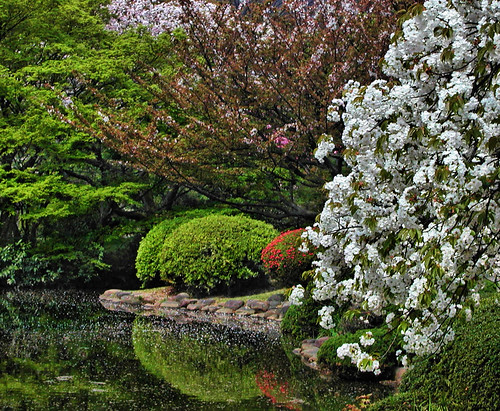
Spring Finale by NatashaP

TheGardenLady corresponds with a Japanese lady she met while in Fukuoka. As we in the US are still under a blanket of snow, my Japanese friend writes how spring has come to her area. Circulating on the computer are some beautiful photos of what spring looks like in Japan. I hope they are real and not enhanced.  Click here for some stunning photos.

Hummingbirds: A Lecture by Eileen Boyle

TheGardenLady attended a lecture given by Eileen Boyle, the education coordinator at Mt. Cuba Center. The talk was on HummingbirdsTrochilidae family.

There are 328 species of Hummingbirds in the world, mostly in the Tropics but in the Eastern half of North America there is only one breeding hummingbird. This is the Ruby Throated Hummingbird- Archilochus colubris.  In the western half of North America there is a hummingbird called the Rufous -Selasphorus rufus that sometimes gets lost and winds up in the Eastern half of the country, but that is rare. Hummingbirds migrate to Central America for the winter and return about mid April to the mid-Atlantic states.

Hummingbirds eat nectar and bugs. I thought that Hummingbirds have to eat half their weight in food each day, but I read online that “Hummingbirds must eat more than their weight in food each day, and they fulfill this need by eating often. They eat approximately every 10 minutes. Because their survival depends critically on eating frequently, more than any other animal – they continually face the danger of starving.”  Hummingbirds have to eat a lot. So you will be helping Hummingbirds by providing their food needs.

To attract hummingbirds to your property, put out hummingbird feeders. Be sure to change the sugar water in them and clean them every 2 or 3 days- washing in the dishwasher is best. Put up multiple feeders, because if you start attracting hummingbirds, you will attract a lot of them and they are very aggressive and territorial. They like feeders where they can perch while sipping. Plant flowers to attract hummingbirds to your property. Hummingbirds love red, yellow, orange and blue tubular flowers. They are not attracted to fragrances. They need early to late blooming flowers to sustain them. They like wetlands and use the down of cattails, spider webs and down of pussy willows to line their nests. They need water to drink and need water to wash in- they even enjoy a gurgling fountain.  Watch this.

A list of basically native plants given by Eileen Boyle

Red buckeye Aesculus pavia

Wild columbine Aquilegia canadensis

Butterfly weed Asclepias tuberosa or any kind of Asclepias

Trumpet creeper Campsis radicans

Spike gayfeather Liatris spicata

Canada lily Lilium canadense

Turk’s cap lily Lilium superbum

Cardinal flower Lobelia cardinalis

Trumpet honeysuckle Lonicera sempervirens (this is the native honeysuckle that is not invasive.)

Scarlet beebalm Monarda didyma

Wild Sweet William Phlox maculata

Downy phlox Phlox pilosa

Alabama phlox Phlox pulchra

Plum-leaved azalea Rhododendron prunifolium

Pink-shell azalea Rhodendron vaseyi

Indian pink Spigelia marilandica

Fire pink Silene virginica

Mt. Cuba Center will be having a Hummingbird weekend this August from Fri. Aug. 27th through Aug. 29th taught by Eileen Boyle and Bill Hilton Jr. Though one session calls itself a teachers workshop, this Hummingbird weekend is open to everyone. They will teach how to set up a hummingbird garden and will even demonstrate how to band hummingbirds. Bill Hilton Jr who was written up in 2008 Discover magazine as one of the “50 best brains in Science” and a top 10 in amateur scientist leads hummingbird tours to Costa Rica. See here.